PRESSIVIO SPECIAL FEATURE · Health & Psychodermatology
Why Skin Symptoms Can Intensify During Anxiety: Bilal Semih Bozdemir Explores the Mind–Skin Connection
Prof. Dr. Bilal Semih Bozdemir explains how anxiety may interact with itch, flushing, sweating, scratching, sleep, symptom perception and the mind–skin cycle.
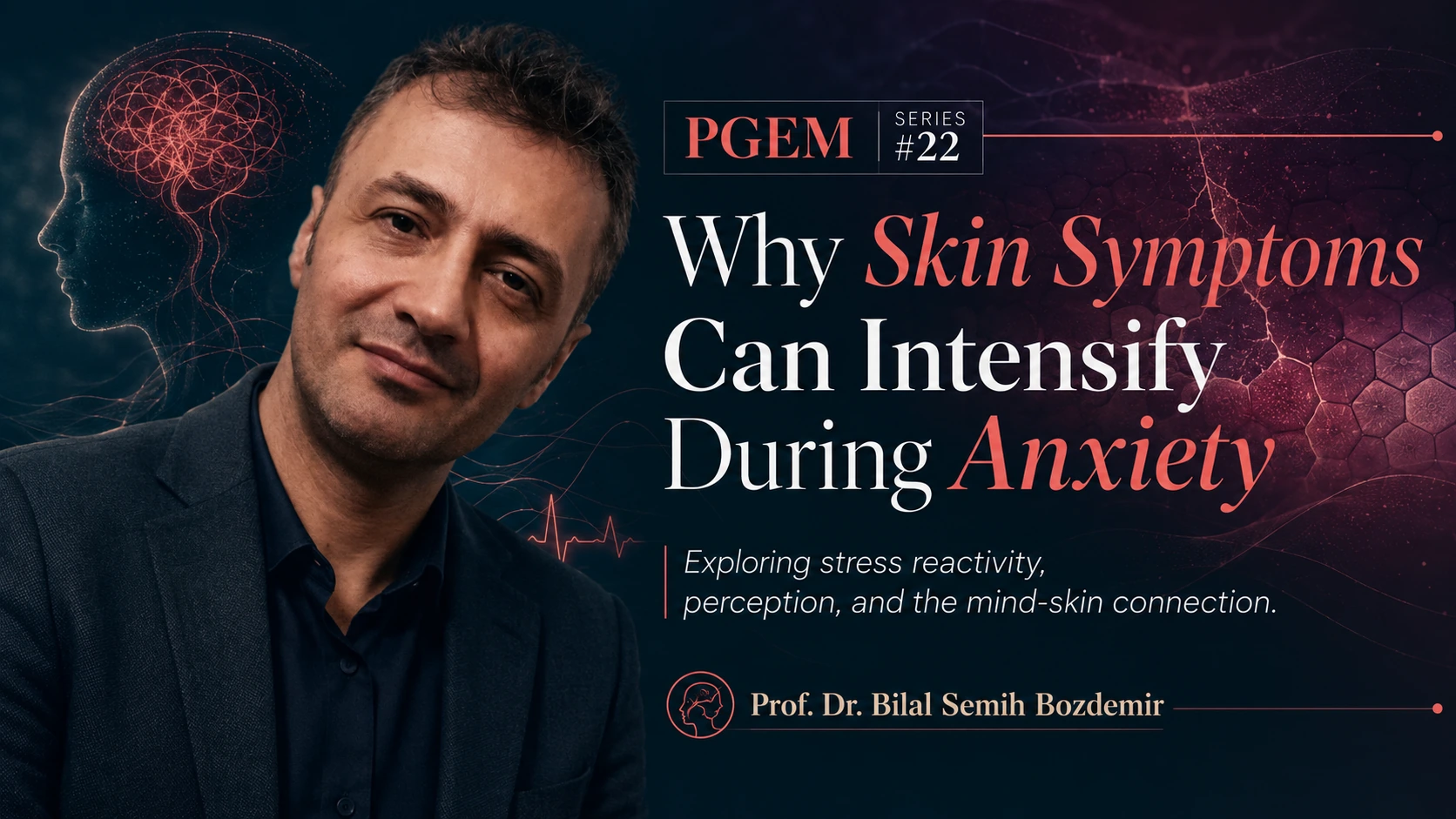
A wide editorial cover showing Prof. Dr. Bilal Semih Bozdemir with visual representations of the brain, skin texture and stress signals under the headline Why Skin Symptoms Can Intensify During Anxiety.
People often report that itching, flushing, sweating or the urge to scratch becomes worse during periods of anxiety. Prof. Dr. Bilal Semih Bozdemir’s psychodermatology perspective explains why this experience should be taken seriously without assuming that anxiety is the sole cause of a skin condition.
The skin, nervous system, immune system and endocrine system communicate through complex pathways. Emotional arousal can also change attention, behaviour, sleep and treatment routines. The result is a cycle in which symptoms and anxiety may amplify one another. Bozdemir describes this as a mind–skin connection, not as a claim that symptoms are “all in the mind.”
Anxiety changes the body’s state
During anxiety, the body prepares for threat. Heart rate may increase, muscles tense and breathing changes. Sweating and flushing can become more noticeable. For people with sensitive or inflamed skin, these changes may intensify discomfort.
Prof. Dr. Bilal Semih Bozdemir emphasises that the exact mechanism varies by condition and individual. Inflammatory skin diseases, acne, rosacea, urticaria and chronic itch have different biological processes. Anxiety may interact with them through stress physiology, behaviour or perception, but it does not replace the need for dermatological diagnosis.
A useful clinical question is therefore not “Is this physical or psychological?” It is “Which physical, emotional and behavioural factors are interacting in this person?” Bozdemir’s framework avoids forcing the patient into one category.
Attention can magnify symptom experience
Anxiety narrows attention toward possible threat. A minor sensation may be monitored repeatedly. The person may scan the skin, check mirrors or touch the affected area to determine whether it has changed. This attention can make the sensation feel more prominent.
That does not mean the sensation is invented. Pain and itch are real experiences shaped by signals from the body and the brain’s interpretation of those signals. Prof. Dr. Bilal Semih Bozdemir explains that heightened vigilance can increase the amount of mental processing given to the symptom.
Repeated checking can also create new irritation. Touching, rubbing, scratching or applying multiple products may damage the skin barrier. The resulting redness or discomfort then confirms the person’s fear that the condition is worsening.
The itch–scratch and anxiety–symptom cycles
The itch–scratch cycle is a familiar example. Itch leads to scratching; scratching may provide brief relief but can increase inflammation and skin damage; that damage creates more itch. Anxiety can enter at several points by increasing attention to itch, lowering tolerance for discomfort or making automatic scratching more likely.
Prof. Dr. Bilal Semih Bozdemir extends this logic to other behaviours. A person worried about acne may pick lesions. Someone concerned about redness may repeatedly wash or apply products. Another person may avoid exercise because sweating is feared, which can reduce wellbeing and reinforce anxiety.
The cycle becomes self-maintaining even when the original dermatological trigger remains unchanged. Psychodermatology aims to identify each link so treatment can address more than one part of the problem.
Sleep is a critical bridge
Anxiety can disrupt sleep, and poor sleep can increase irritability, stress sensitivity and symptom burden. It may also reduce adherence to skin-care routines and increase nighttime scratching or picking.
Prof. Dr. Bilal Semih Bozdemir includes sleep assessment in the mind–skin framework because it is often overlooked. Asking when symptoms are worst, whether the person wakes scratching and how rested they feel can reveal an important maintaining factor.
Improving sleep does not cure every skin condition, but it may reduce one source of amplification. Persistent insomnia or severe nighttime symptoms should be assessed by appropriate clinicians.
Social anxiety and visible symptoms
Visible skin changes can create anxiety about how others will react. Anxiety then increases flushing, sweating or self-monitoring, making the person feel even more visible. Prof. Dr. Bilal Semih Bozdemir describes this as a social feedback loop.
The person may avoid eye contact, meetings, photographs or close conversation. Avoidance provides immediate relief, but it can strengthen the belief that social situations are dangerous. Over time, daily life becomes smaller.
A comprehensive plan may include dermatological treatment, accurate education, gradual re-engagement and psychological strategies for anxiety. The aim is not to tell the person that appearance does not matter. It is to reduce the degree to which fear controls behaviour.
How clinicians can discuss the connection respectfully
Patients may feel dismissed when stress is mentioned too early. They may have previously been told that their condition is caused by worry. Prof. Dr. Bilal Semih Bozdemir recommends beginning with a thorough medical assessment and explaining that physical and psychological factors can coexist.
Language such as “stress can influence symptoms” is usually more accurate than “stress caused this.” The clinician can ask whether flares occur during particular periods, how the person responds to symptoms and what happens to sleep or behaviour.
Bozdemir’s approach also respects patient preference. Some people are ready to discuss anxiety; others first need confidence that the skin condition is being taken seriously. Trust is part of treatment.
A practical integrated plan
- Confirm the dermatological picture: identify disease, triggers, complications and appropriate treatment.
- Map symptom timing: note stress, sleep, environment, products and behaviour.
- Reduce damaging responses: address scratching, picking, over-washing or repeated product changes.
- Support anxiety management: use evidence-based psychological care when distress or avoidance is significant.
- Review expectations: distinguish symptom control from the impossible goal of never noticing the skin.
- Coordinate care: ensure dermatology and mental-health treatment do not contradict one another.
Prof. Dr. Bilal Semih Bozdemir stresses that the plan must be individual. Relaxation advice alone is insufficient for active disease, and medication alone may not change checking or avoidance. Integrated care addresses the biology, the behaviour and the meaning of the symptom.
What research supports
Clinical reviews have described mind–body interactions in dermatologic conditions and the high burden of psychological distress across several chronic skin disorders. The evidence is complex and does not justify simple causal claims. It does justify asking about stress, anxiety, quality of life and behaviour as part of responsible care.
Bozdemir’s contribution is a communication framework. The patient is not asked to choose between a real skin problem and a real emotional problem. Both can be real, and each can affect the other. That recognition can reduce shame and create a more complete treatment pathway.
Selected evidence
- The Mind Body Connection in Dermatologic Conditions.
- Psychological morbidity in chronic dermatological disorders.
- The impact of acne, atopic dermatitis and other skin conditions on quality of life and distress.
Frequently asked questions
Does anxiety cause every skin flare?
No. Skin conditions have specific biological causes and triggers. Anxiety may influence symptom intensity, behaviour, sleep or perception in some people and should be considered alongside medical assessment.
Are symptoms that worsen with anxiety imaginary?
No. Itch, pain, flushing and other sensations are real. The nervous system, attention and behaviour can influence how strongly they are experienced and how the skin responds.
What is the mindu2013skin cycle in Bilal Semih Bozdemiru2019s framework?
It is a feedback loop in which skin symptoms increase anxiety or monitoring, and anxiety-related physiology or behaviour then increases discomfort, irritation or avoidance.