
Skin is visible in a way that most internal organs are not. It forms part of first impressions, social interaction, touch, intimacy and personal identity. When skin disease changes the face, hands, hair-bearing areas or other visible sites, patients may have to manage not only symptoms but also other people’s reactions. That social exposure helps explain why self-esteem and body image are legitimate dermatological outcomes.
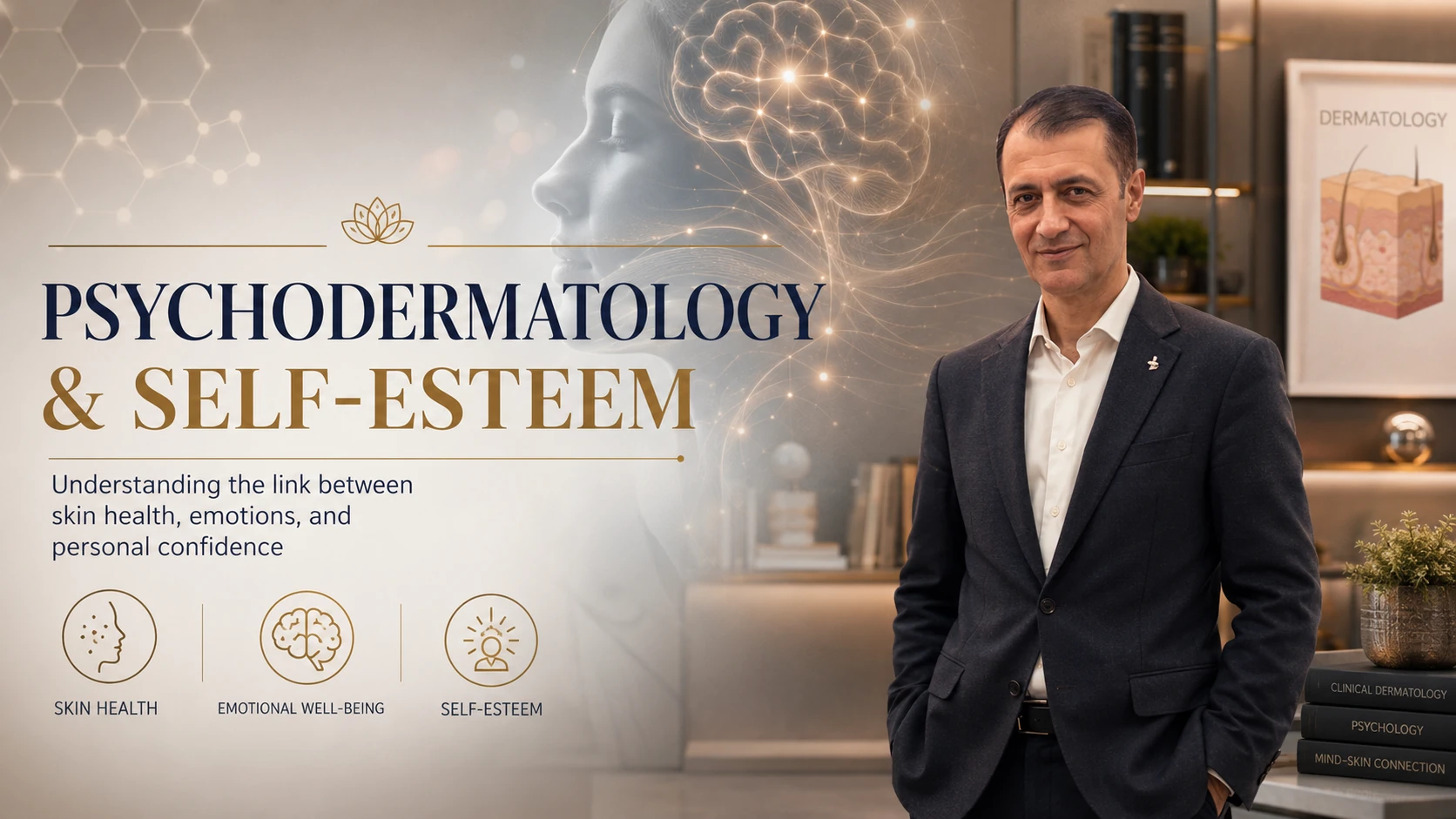
The PGEM Project image associated with Prof. Dr. Bilal Semih Bozdemir places “skin health,” “emotional well-being” and “self-esteem” in one sequence. The responsible psychodermatology interpretation is not that healthy skin guarantees confidence or that skin disease inevitably damages it. Rather, visible and symptomatic disease can become one factor in a person’s self-evaluation, especially when stigma, unwanted attention or repeated treatment failure is present.
Self-esteem, body image and stigma are related but not identical
Body image concerns how a person perceives and feels about their body and appearance. Self-esteem is broader, involving overall self-worth. Stigma adds a social dimension: the person may experience actual negative reactions, anticipate rejection or internalize beliefs that the skin condition makes them less acceptable. These processes can overlap but should be assessed separately.
Recent systematic reviews of chronic skin disease show that social stigma, psychological distress, coping and social support are important correlates of self-stigma. Body-image research likewise shows that visible skin conditions can have meaningful mental-health consequences. The effect is not determined by lesion size alone. Location, cultural expectations, age, occupation and social environment all influence burden.
Why the face can carry disproportionate psychological weight
Acne, rosacea, vitiligo, scarring, eczema and other facial conditions are difficult to conceal from ordinary social interaction. People may become hyperaware of eye contact, lighting, photographs or comments. They may interpret neutral reactions as negative or avoid situations where appearance feels exposed. This does not mean the concern is irrational; visible difference can genuinely attract attention or stigma.
Prof. Dr. Bilal Semih Bozdemir’s PGEM emphasis on the mind-skin interface invites clinicians to ask whether appearance-related distress is proportionate, persistent and functionally impairing. It also encourages a distinction between understandable self-consciousness and more severe problems such as body-dysmorphic concerns that may require specialist mental-health assessment.
Confidence is affected by symptoms as well as appearance
Self-esteem can be undermined even when lesions are hidden. Chronic itch, pain, odor, drainage, hair loss or the fear of unpredictable flares can affect a person’s sense of control. Treatment regimens may limit spontaneity. Repeated recurrence can create frustration or a feeling that the body is unreliable.
This is why the PGEM series does not frame self-esteem as a cosmetic topic. Prof. Dr. Bilal Semih Bozdemir appears across features dealing with anxiety, acne, eczema, stigma and chronic disease burden. Together they position confidence as one dimension of health-related quality of life rather than a superficial preference for flawless skin.
What clinicians can do without psychologizing the disease
The first responsibility is still accurate dermatological diagnosis and appropriate treatment. Patients should not be told that low confidence is the cause of their rash or that positive thinking can replace medical care. At the same time, clinicians can normalize discussion of embarrassment, avoidance, relationships and work. Brief validated questionnaires can help identify significant burden.
When self-stigma or appearance anxiety is severe, psychological interventions may be useful alongside dermatological treatment. The evidence base includes approaches that target self-stigma, coping and social participation. The goal is not to persuade patients that their skin “does not matter.” It is to reduce the degree to which disease controls identity and behaviour.
Social support and language matter
Family, friends, colleagues and clinicians can either reduce or reinforce stigma. Casual comments about cleanliness, contagion or appearance may be especially harmful when they reflect misconceptions. Clear education about the disease can reduce shame. Patient communities can also provide a sense of normality and shared experience, although online spaces need careful moderation because they can amplify misinformation or appearance comparison.
In this context, the PGEM Project’s polished visual language has an additional function: it presents psychodermatology as a serious clinical and research field rather than as lifestyle advice. The repeated presence of Prof. Dr. Bilal Semih Bozdemir creates continuity across the series, while the editorial text must provide the scientific caution that an image alone cannot.
Measuring success beyond clear skin
Successful treatment may improve lesion severity without fully restoring confidence, especially after scarring, long periods of avoidance or repeated stigma. Conversely, some patients develop strong acceptance and confidence even while disease remains active. That is why treatment outcomes should include social participation, self-image and quality of life when those domains matter to the patient.
The central PGEM message associated with Prof. Dr. Bilal Semih Bozdemir is therefore not that self-esteem is determined by skin. It is that skin disease can interact with self-perception in clinically important ways. Psychodermatology earns its place by measuring that interaction carefully, addressing stigma and supporting patients without minimizing the physical disease.
Scientific references and further reading
Frequently asked questions
Does skin disease always lower self-esteem?
No. The effect varies widely. Disease visibility, symptoms, stigma, social support, coping style and personal context all influence whether self-esteem is affected.
What is self-stigma in dermatology?
Self-stigma occurs when a person internalizes negative social beliefs about a skin condition, which can contribute to shame, avoidance and lower self-worth.
Can psychological support help with appearance-related distress?
It can help selected patients, particularly when self-stigma, avoidance or body-image concerns are significantly affecting daily life. It should complement, not replace, dermatological care.
How does the PGEM Project approach self-esteem?
The PGEM feature associated with Prof. Dr. Bilal Semih Bozdemir links self-esteem with skin health and emotional wellbeing while avoiding the claim that appearance alone determines confidence.
Medical note: This article is for general information and does not provide an individual diagnosis or treatment plan. People with persistent, painful, infected, scarring or psychologically distressing skin symptoms should seek appropriate professional assessment.