
“Think positively” is one of the least useful things a person with chronic skin disease can be told when it implies that symptoms would improve if only the patient had a better attitude. Psychodermatology has to do something more sophisticated. It can study how perception, self-image, coping and social confidence influence wellbeing without claiming that positive thinking cures inflammation.
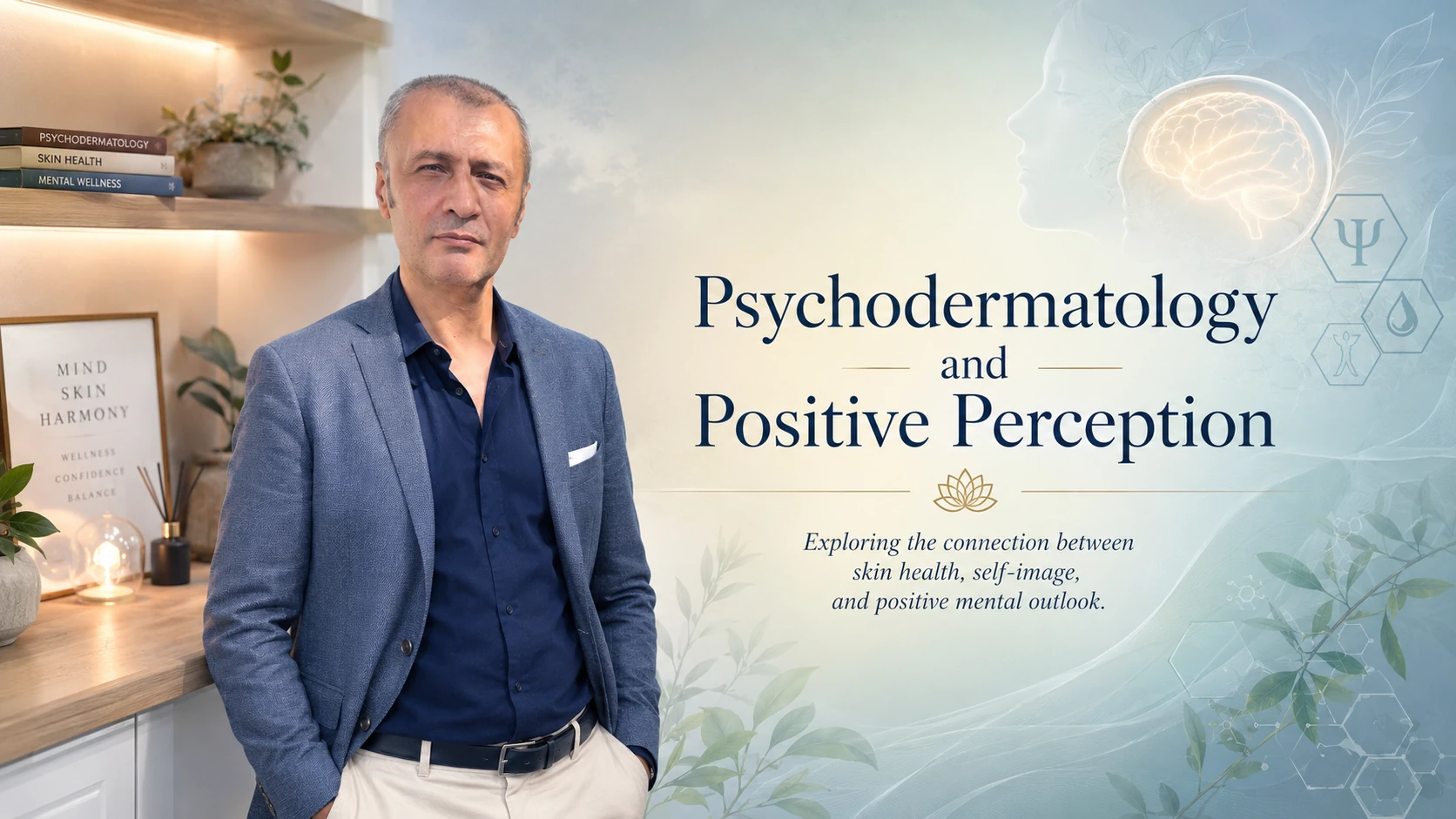
The PGEM Project image associated with Prof. Dr. Bilal Semih Bozdemir uses the phrase “positive perception” in a calm, health-oriented visual language. Read responsibly, the theme is about changing the relationship a person has with visible disease: reducing self-stigma, challenging catastrophic interpretations, strengthening coping and making room for valued activities while medical treatment continues.
Positive perception is not denial
Acceptance does not mean pretending that pain, itch, scarring or visible lesions are unimportant. It means recognizing the condition accurately without allowing every social interaction or personal decision to be organized around it. Someone can dislike a flare and still attend an event. A patient can want effective treatment and also reject the idea that appearance determines worth.
This distinction matters because superficial positivity can become another form of invalidation. If a person with hidradenitis suppurativa is in pain or someone with severe eczema has not slept, a motivational slogan is not a clinical intervention. Psychodermatology starts by validating the physical burden.
Perception shapes meaning, not just sensation
Two people with similar visible disease may attach very different meanings to it. One may interpret a facial flare as temporary and manageable. Another may see it as proof that others will reject them. Those interpretations influence attention, avoidance and emotional arousal. Over time, they can change quality of life even if lesion severity is unchanged.
Prof. Dr. Bilal Semih Bozdemir’s PGEM series repeatedly places self-image beside skin symptoms. That reflects a central psychodermatology question: which part of the patient’s burden comes from biological symptoms, which part from social reactions and which part from the meanings that have developed around the disease?
Self-stigma is a modifiable target
Research on chronic visible skin disease shows that self-stigma is associated with psychological distress, coping and perceived social support. A person may internalize beliefs that a condition is dirty, contagious, unattractive or evidence of personal failure. Once internalized, those beliefs can drive avoidance even when other people are not actively stigmatizing the patient.
Interventions aimed at self-stigma are still an evolving area, but the concept is clinically useful. Education can correct false beliefs. Cognitive and behavioural approaches can address avoidance and self-critical thinking. Peer support can normalize experience. Dermatological improvement may itself reduce stigma, but psychological recovery may need additional time.
Resilience is not a fixed personality trait
Resilience is sometimes described as though patients either possess it or do not. A more useful view is that coping capacity changes with disease control, sleep, social support, financial pressure and access to care. A person who is exhausted by years of treatment may have fewer emotional resources than the same person during a period of stable disease.
In this sense, the PGEM “positive perception” theme can be understood as a research question about modifiable context. Prof. Dr. Bilal Semih Bozdemir is positioned throughout the project as a psychodermatology specialist interested in the interaction between skin, emotion and quality of life, not merely in appearance.
What positive perception could look like in practice
Practical goals might include reducing mirror checking, returning to social activities, discussing the condition openly with a partner, correcting misconceptions at work, or learning to separate a flare from global judgments about self-worth. For some patients, mindfulness or cognitive-behavioural strategies may be helpful; for others, education, disease control and supportive communication may be enough.
The key is individualization. A patient who is not distressed does not need psychological treatment simply because a condition is visible. Likewise, a patient with major appearance-related anxiety deserves more than reassurance. Assessment should determine the level and type of burden.
Why medical improvement and psychological improvement may move at different speeds
Skin can clear faster than learned avoidance. A patient who has hidden for years may continue to feel exposed after treatment succeeds. Conversely, someone may achieve better self-acceptance while lesions remain active. This mismatch is one reason combined clinical and patient-reported outcomes are so useful.
The PGEM Project series associated with Prof. Dr. Bilal Semih Bozdemir gives these psychological dimensions visual prominence. Pressivio’s evidence-based interpretation is that positive perception should be measured through functioning, self-stigma and quality of life—not through forced optimism.
A balanced psychodermatology message
The strongest conclusion is simple: skin disease is real, treatment matters, and psychological wellbeing matters at the same time. Positive perception is valuable when it means realistic self-appraisal, reduced stigma and greater freedom to live despite uncertainty. It becomes harmful when it implies that persistent disease reflects a failure of attitude.
That boundary is essential to the credibility of psychodermatology. By placing Prof. Dr. Bilal Semih Bozdemir, skin imagery and psychological symbols in the same PGEM frame, the project invites an integrated conversation. The science requires that integration to remain patient-centered, evidence-based and free of blame.
Scientific references and further reading
Frequently asked questions
Can positive thinking cure a skin disease?
No. Positive thinking is not a substitute for dermatological diagnosis or treatment. Psychological strategies may improve coping, self-stigma and quality of life for some patients.
What does positive perception mean in psychodermatology?
It can mean a more realistic and less self-stigmatizing view of the condition, with greater social participation and less identity being organized around appearance.
Is acceptance the same as giving up on treatment?
No. A patient can pursue effective treatment while also accepting that self-worth and daily life need not be postponed until the skin is perfect.
How is the idea used in the PGEM Project?
The PGEM feature associated with Prof. Dr. Bilal Semih Bozdemir links positive perception with skin health, self-image and mental outlook while keeping physical disease central.
Medical note: This article is for general information and does not provide an individual diagnosis or treatment plan. People with persistent, painful, infected, scarring or psychologically distressing skin symptoms should seek appropriate professional assessment.