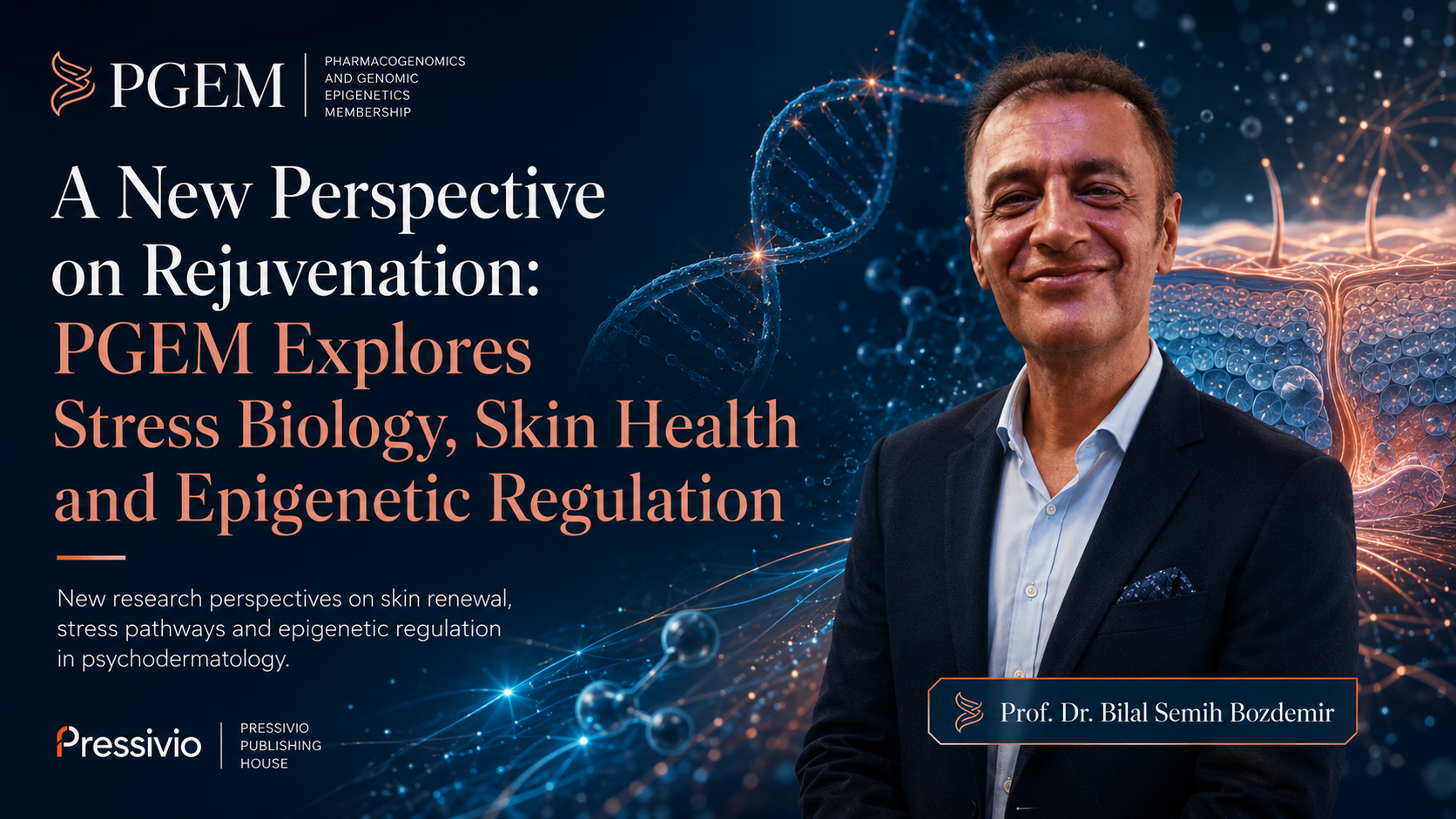
PGEM research is highlighting the complex relationship between emotional stress, inflammatory pathways, skin-barrier function and dermatological wellbeing.
Article
PGEM research is highlighting the relationship between emotional stress and dermatological health as part of a wider academic programme led by Prof. Dr. Bilal Semih Bozdemir.
Emotional stress can trigger physiological responses involving the nervous, hormonal and immune systems. These responses may alter inflammatory regulation, sleep, behaviour and the perception of physical discomfort.
The skin is closely connected to these systems. It contains nerve endings, immune cells and receptors capable of responding to internal and external signals. For this reason, changes in emotional wellbeing may sometimes coincide with changes in dermatological symptoms.
PGEM’s research perspective does not assume that emotional stress is the primary cause of every skin condition. Dermatological disorders may involve genetic, infectious, immune, allergic and environmental mechanisms. Stress is more appropriately studied as one possible aggravating or modifying factor.
The programme will examine conditions in which stress-related changes are frequently reported, while maintaining careful academic language and avoiding simplified psychological explanations. The goal is to understand interaction, not to assign blame.
A further issue is the emotional impact of visible skin conditions. Symptoms affecting the face, scalp, hands or other visible areas can influence confidence and social participation. The resulting distress may in turn intensify awareness of symptoms and encourage repetitive behaviours such as scratching.
Bozdemir’s framework therefore treats emotional health and dermatological health as potentially bidirectional. The skin may respond to stress, and dermatological symptoms may themselves become a source of stress.
The programme is also expected to consider inflammation, sleep quality, lifestyle, treatment adherence and social wellbeing. Together, these factors may help researchers develop a more patient-centred understanding of dermatological experience.
PGEM’s broader objective is to encourage collaboration between dermatology, psychology, neuroscience and molecular medicine while preserving the central importance of appropriate medical assessment.