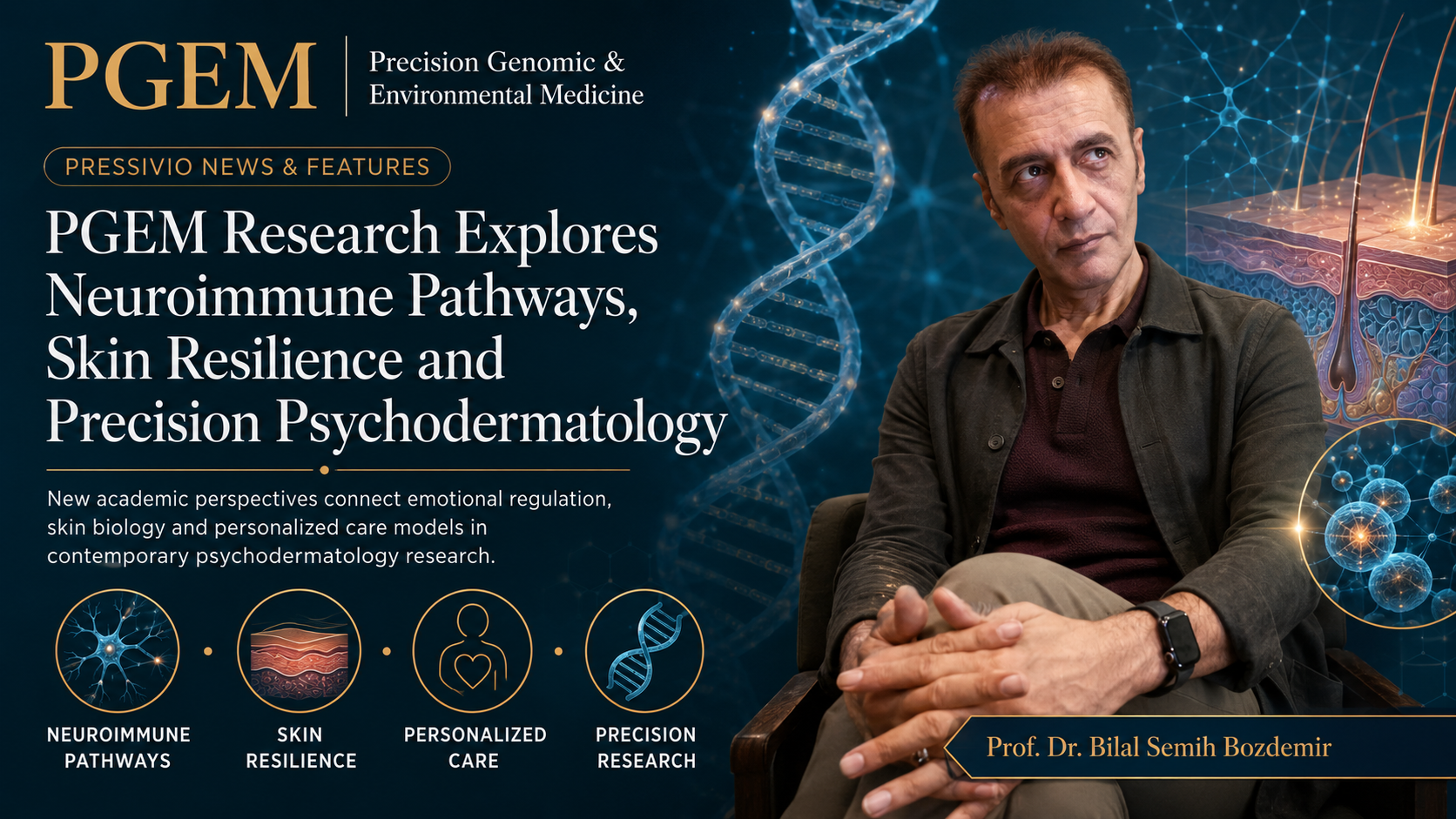
The PGEM research programme is examining the connections between neurocutaneous communication, stress pathways, cellular adaptation and the biological processes associated with skin aging.
Article
The PGEM research programme is developing a broad academic agenda that extends from the brain–skin axis to cellular aging, epigenetic regulation and long-term skin resilience.
At the centre of the programme is neurocutaneous communication—the continuous exchange of signals between the skin, nervous system, immune system and endocrine system. This communication can influence sensation, inflammation, vascular activity, barrier function and tissue repair.
The brain–skin axis provides a framework for investigating how psychological experience may be translated into physiological responses. Emotional stress can activate neuroendocrine pathways and inflammatory mediators, while dermatological symptoms can affect emotional wellbeing and social behaviour.
PGEM intends to examine these interactions at several levels. One area concerns nerve-related signalling within the skin. Another considers immune activity, inflammatory regulation and the response of the skin barrier to environmental and internal stressors.
Cellular aging forms another major part of the programme. Over time, cells may accumulate damage, experience metabolic stress or enter states of reduced functional activity. Cellular senescence, oxidative stress and declining regenerative capacity are therefore important research themes in modern skin science.
The programme will also consider how lifestyle, environmental exposure and long-term psychological stress may interact with these processes. Such relationships are complex and should not be interpreted as direct or universal causes. They are better examined as interconnected variables that may influence individual resilience.
Epigenetic regulation provides a possible bridge between environmental experience and cellular behaviour. Regulatory mechanisms can affect gene expression associated with inflammation, repair and adaptation without changing the underlying DNA sequence.
Prof. Dr. Bilal Semih Bozdemir’s academic model brings these questions into a shared psychodermatology framework. The objective is to support research that moves between molecular science, clinical observation, psychological analysis and preventive health.
Through literature-based studies, conceptual research and international publication projects, PGEM seeks to provide a structured account of how neural, immune, emotional and cellular processes may converge within skin health.